The aerospace industry stands at the vanguard of technological progress, relentlessly pushing the boundaries of what is possible. At the heart of this relentless innovation lies the development and application of advanced materials. These materials are not merely components; they are the fundamental building blocks that enable aircraft to fly faster, lighter, more efficiently, and with greater safety. In the United States, a vibrant ecosystem of research institutions, private companies, and government agencies is driving a revolution in aerospace engineering, powered by breakthroughs in aerospace materials innovation. This decade, we are witnessing the emergence of several game-changing materials that are poised to redefine the future of flight, space exploration, and national defense.
Anúncios
The quest for superior materials in aerospace is a perpetual one. Engineers and scientists are constantly seeking substances that can withstand extreme temperatures, immense pressures, corrosive environments, and intense mechanical stresses, all while minimizing weight and maximizing durability. The stakes are incredibly high; every ounce saved translates into fuel efficiency, increased payload capacity, and extended range. Every improvement in strength and resilience enhances safety and extends the operational life of critical components. This article will delve into three pivotal areas of aerospace materials innovation that are currently revolutionizing US aerospace engineering: advanced lightweight composites, smart and adaptive alloys, and the transformative power of additive manufacturing with novel materials.
The Imperative for Advanced Materials in Aerospace
Before we dive into the specific innovations, it’s crucial to understand why advanced materials are so critical to aerospace. The demands placed on aerospace vehicles, whether commercial airliners, military jets, or spacecraft, are unparalleled. Traditional materials like aluminum and steel, while still vital, are increasingly reaching their performance limits for next-generation designs. The drive for higher fuel efficiency, reduced emissions, enhanced performance (speed, maneuverability, range), and increased safety margins necessitates materials that offer a superior strength-to-weight ratio, improved fatigue resistance, better thermal management, and enhanced corrosion resistance.
Anúncios
Furthermore, the strategic importance of the US aerospace sector cannot be overstated. It is a cornerstone of economic prosperity, a driver of scientific discovery, and a critical component of national security. Maintaining a competitive edge in this global arena requires continuous investment in research and development, particularly in materials science. The innovations discussed below are not just incremental improvements; they represent fundamental shifts in how aerospace vehicles are designed, manufactured, and operated, promising a future of unprecedented capabilities.
1. Advanced Lightweight Composites: The Backbone of Modern Aircraft
One of the most impactful areas of aerospace materials innovation has been the widespread adoption and continuous advancement of lightweight composites. Composites are materials made from two or more constituent materials with significantly different physical or chemical properties that remain separate and distinct at the macroscopic or microscopic level within the finished structure. For aerospace, this typically means high-strength fibers embedded in a polymer matrix.
Carbon Fiber Reinforced Polymers (CFRPs)
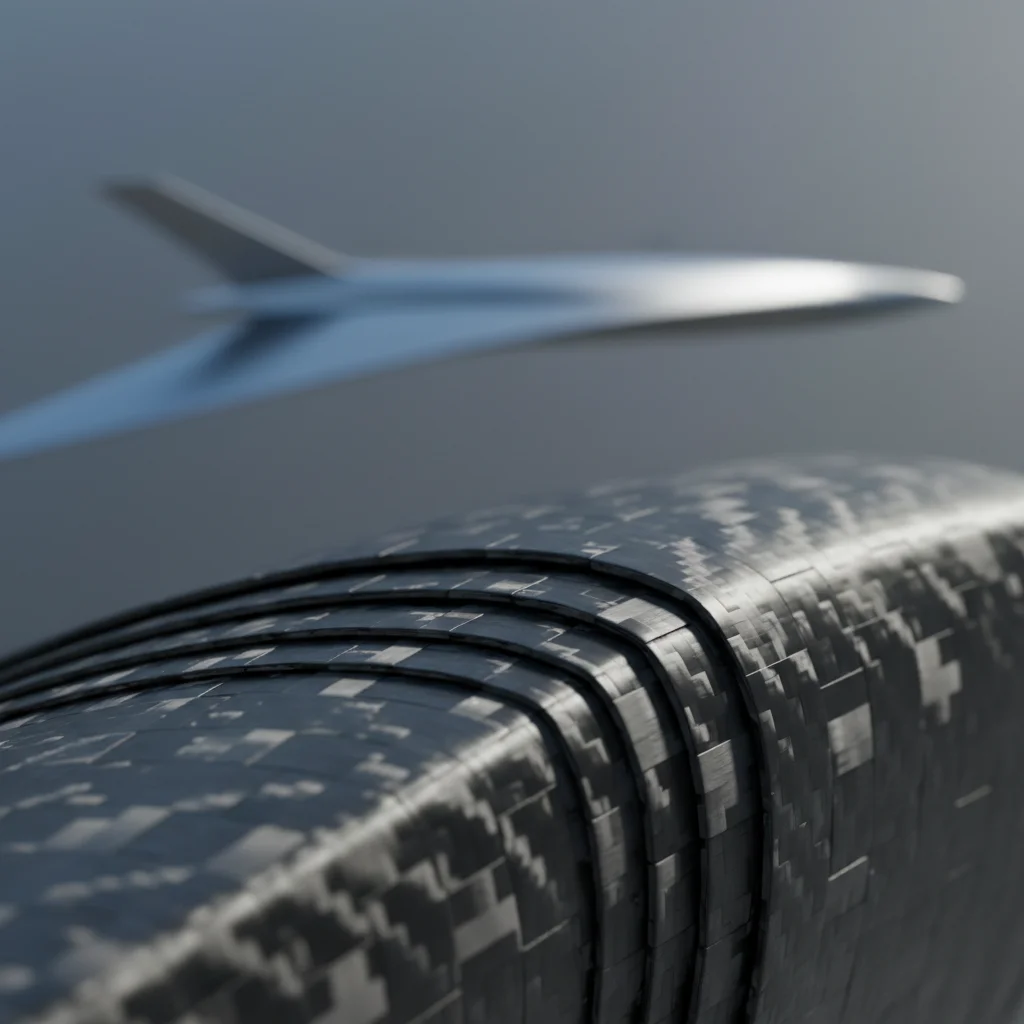
Carbon Fiber Reinforced Polymers (CFRPs) are perhaps the most well-known and widely used advanced composites in aerospace. Their exceptional strength-to-weight ratio, stiffness, and fatigue resistance make them ideal for primary structural components such as wings, fuselages, and tail sections. Modern aircraft like the Boeing 787 Dreamliner and the Airbus A350 XWB are comprised of over 50% composite materials by weight, primarily CFRPs. This extensive use significantly reduces the aircraft’s overall weight, leading to substantial fuel savings and lower operational costs. The continued refinement of CFRP manufacturing processes, including automated fiber placement (AFP) and automated tape laying (ATL), is further reducing production costs and enabling more complex geometries.
Next-Generation Composite Architectures
Beyond traditional laminates, researchers are exploring novel composite architectures. These include:
- Textile Composites: Using woven, braided, or knitted fiber preforms allows for intricate shapes and improved damage tolerance. These structures can distribute loads more efficiently and resist delamination, a common failure mode in traditional laminates.
- Nanocomposites: Incorporating nanoparticles (e.g., carbon nanotubes, graphene) into the polymer matrix can enhance mechanical properties, electrical conductivity, and even introduce self-healing capabilities. While still largely in the research phase, nanocomposites hold immense promise for future aerospace applications.
- Thermoplastic Composites: Unlike thermoset composites (which cure irreversibly), thermoplastic composites can be reformed and recycled. They offer superior toughness, impact resistance, and faster manufacturing cycles, making them increasingly attractive for high-volume production and repair scenarios.
The ongoing development in lightweight composites is not just about making parts lighter; it’s about enabling entirely new aircraft designs. Concepts like blended wing bodies, which promise radical improvements in aerodynamic efficiency, are heavily reliant on the ability to manufacture large, complex, and load-bearing composite structures. The US aerospace industry is investing heavily in both fundamental research into new fiber and resin systems and advanced manufacturing techniques to unlock the full potential of these materials.
2. Smart and Adaptive Alloys: Materials That Respond
Another fascinating frontier in aerospace materials innovation is the development of smart and adaptive alloys. These are materials designed to sense and respond to changes in their environment, offering unprecedented levels of functionality, self-correction, and performance optimization. Unlike passive materials, smart alloys can actively participate in the operational dynamics of an aircraft or spacecraft.
Shape Memory Alloys (SMAs)
Shape Memory Alloys (SMAs), such as Nickel-Titanium (NiTi) alloys (Nitinol), are a prime example. These alloys can ‘remember’ a pre-set shape and return to it upon heating, even after being plastically deformed. In aerospace, SMAs are being explored for:
- Morphing Wings: Enabling aircraft wings to change their shape in flight to optimize aerodynamic performance for different flight regimes (e.g., takeoff, cruise, landing), leading to significant fuel savings and reduced drag.
- Adaptive Structures: Creating components that can adjust their stiffness or damping properties to mitigate vibrations or acoustic noise.
- Self-Deployable Structures: For space applications, SMAs can be used to deploy antennas, solar arrays, or other structures in space, simplifying deployment mechanisms and reducing weight.
Self-Healing Materials
Imagine an aircraft wing that can repair itself in flight. While still largely a research endeavor, self-healing materials are a Holy Grail for aerospace. These materials incorporate mechanisms (e.g., encapsulated healing agents, microvascular networks) that can autonomously detect and repair micro-cracks or damage, extending the lifespan of components, enhancing safety, and reducing maintenance costs. While not exclusively alloys, many self-healing concepts are being integrated into metallic matrices or composite structures that utilize advanced metallic components.
High-Temperature Alloys and Ceramic Matrix Composites (CMCs)
While not ‘smart’ in the adaptive sense, high-temperature alloys and Ceramic Matrix Composites (CMCs) are critical for extreme environments, especially in engine components. Nickel-based superalloys have long been the workhorses of jet engines, allowing for higher operating temperatures and thus greater efficiency. However, CMCs, which consist of ceramic fibers embedded in a ceramic matrix, can withstand even higher temperatures (up to 2,400°F or 1,315°C) while being significantly lighter than superalloys. This enables engines to run hotter, improving thrust and fuel efficiency, and reducing cooling requirements. GE Aviation’s LEAP engine, for example, incorporates CMC components, marking a significant step forward in propulsion technology.
3. Additive Manufacturing with Novel Materials: Building the Future Layer by Layer
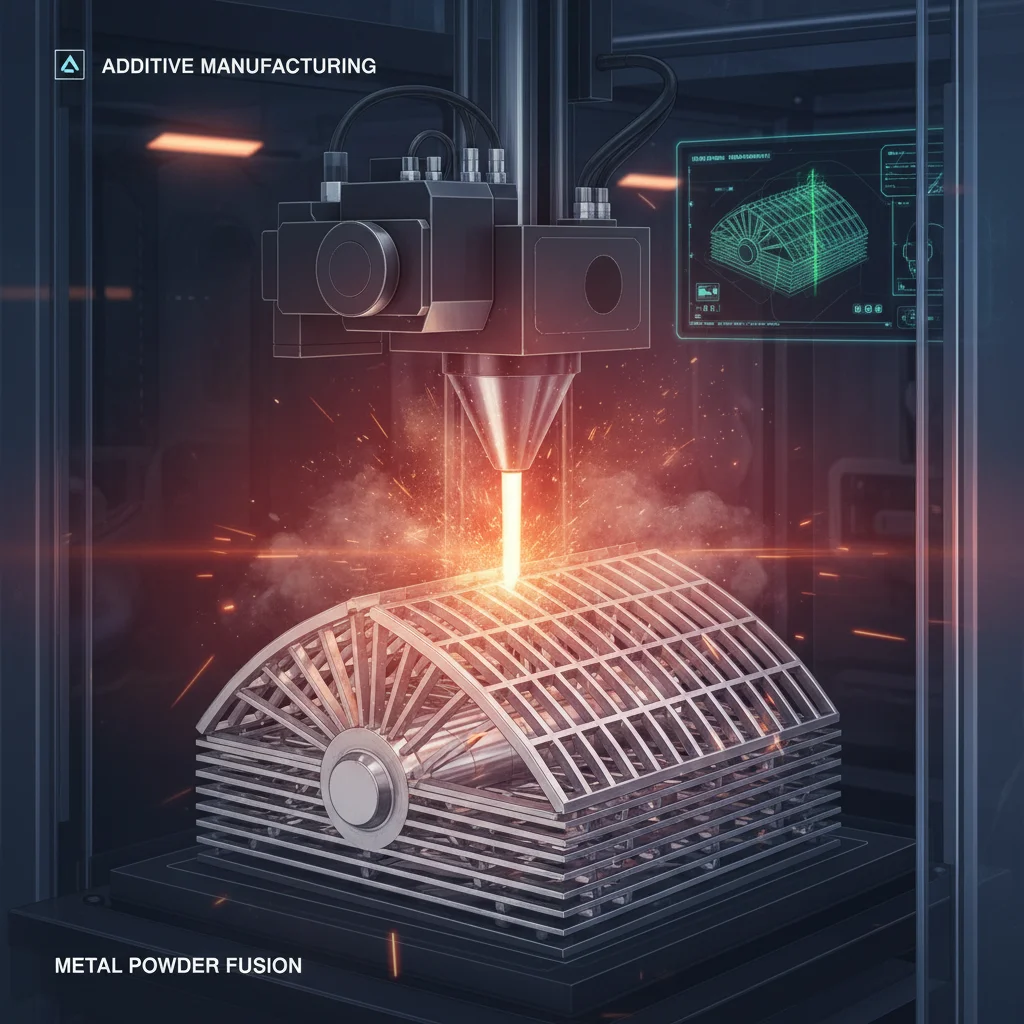
Additive Manufacturing (AM), commonly known as 3D printing, is fundamentally transforming how aerospace components are designed and produced. What makes AM a true aerospace materials innovation is its ability to create highly complex geometries and optimized structures that are impossible to achieve with traditional manufacturing methods, often using novel material combinations.
Metal Additive Manufacturing (MAM)
Metal AM, particularly techniques like Selective Laser Melting (SLM) and Electron Beam Melting (EBM), is revolutionizing the production of critical aerospace parts. Titanium alloys, nickel-based superalloys, and even aluminum alloys are being printed to create components such as:
- Lightweight Brackets and Structures: Topology optimization software can design parts with optimal strength-to-weight ratios, often resulting in organic, lattice-like structures that are significantly lighter than conventionally manufactured counterparts.
- Complex Engine Components: Fuel nozzles, turbine blades, and other hot-section parts can be printed with internal cooling channels and intricate geometries that enhance performance and durability, reducing the number of parts and assembly time.
- Spare Parts on Demand: AM enables the production of spare parts closer to the point of need, reducing inventory costs and lead times, which is particularly valuable for aging fleets or remote operations.
Advanced Polymers and Composites for AM
While metal AM garners significant attention, advancements in polymer and composite AM are equally important. High-performance polymers like PEEK (Polyetheretherketone) and PEI (Polyetherimide) can be 3D printed to produce strong, lightweight, and heat-resistant components for interior parts, ducts, and even some structural elements. The integration of continuous fibers (e.g., carbon fiber, fiberglass) into printed polymer parts is creating true additively manufactured composites, offering unparalleled design freedom and localized property optimization.
The cutting edge of AM involves multi-material printing and gradient printing. Multi-material printing allows for the integration of different materials within a single part, enabling functionalities like embedded sensors, integrated electronics, or localized properties (e.g., a stiff core with a flexible outer layer). Gradient printing takes this a step further by smoothly transitioning between two or more materials, creating parts with tailored property variations throughout their volume. This could lead to components with optimized thermal management, enhanced fatigue resistance, or improved wear characteristics by precisely controlling the material composition at every point.
The US aerospace industry is heavily investing in AM research, from developing new printable alloys and polymers to qualifying AM parts for flight. Organizations like NASA, the Department of Defense, and major aerospace manufacturers are pioneering the use of AM to create components for rockets, satellites, and advanced aircraft, promising a future where design complexity is no longer a manufacturing constraint.
The Broader Impact and Future Outlook of Aerospace Materials Innovation
The three areas of aerospace materials innovation discussed—advanced lightweight composites, smart and adaptive alloys, and additive manufacturing with novel materials—are not isolated developments. They often intersect and complement each other, creating synergistic effects that accelerate progress across the entire aerospace sector. For instance, smart alloys might be integrated into composite structures, or complex composite geometries might be realized through advanced additive manufacturing techniques.
Sustainability and Environmental Impact
Beyond performance enhancements, these material innovations are crucial for addressing the aerospace industry’s sustainability challenges. Lighter aircraft consume less fuel, directly reducing greenhouse gas emissions. Materials with extended lifespans and self-healing capabilities reduce waste and the need for frequent replacements. The recyclability of thermoplastic composites and the ability of AM to minimize material waste through optimized designs further contribute to a more environmentally responsible aerospace future. The US is actively pursuing greener aviation solutions, and advanced materials are a cornerstone of this strategy.
Economic and Strategic Advantages
For the United States, leadership in aerospace materials innovation translates directly into economic and strategic advantages. It fosters job creation in high-tech manufacturing and research, strengthens supply chains, and ensures the nation remains at the forefront of aerospace technology. This leadership is vital not only for commercial competitiveness but also for national security, providing advanced capabilities for defense and space exploration.
Challenges and Opportunities
Despite the tremendous progress, challenges remain. The qualification and certification of new materials and manufacturing processes for aerospace applications are rigorous and time-consuming. Ensuring long-term reliability and understanding complex failure mechanisms for novel materials require extensive testing and validation. The cost of some advanced materials and AM processes can also be a barrier to widespread adoption, though economies of scale and technological advancements are steadily bringing these costs down.
However, the opportunities far outweigh the challenges. The continuous pursuit of superior aerospace materials innovation promises a future where aircraft are not just more efficient and safer, but also more adaptable, intelligent, and sustainable. From hypersonic flight to advanced urban air mobility vehicles and ambitious space missions, the materials being developed today will define the capabilities of tomorrow’s aerospace systems.

Conclusion
The US aerospace industry is experiencing a transformative period, driven by unparalleled advancements in materials science and engineering. The innovations in advanced lightweight composites, smart and adaptive alloys, and additive manufacturing with novel materials are not just incremental improvements; they are foundational shifts that are redefining the very essence of aerospace design and performance. These materials enable engineers to create aircraft and spacecraft that are lighter, stronger, more fuel-efficient, safer, and more environmentally friendly than ever before.
As we move further into this decade, the relentless pursuit of aerospace materials innovation will continue to be a critical differentiator for the United States, ensuring its leadership in both commercial aviation and defense. The synergistic interplay between these material breakthroughs promises a future of astonishing capabilities, pushing the boundaries of human ingenuity and soaring to new heights, quite literally, in the skies and beyond.
The journey of discovery in advanced materials is far from over. Each breakthrough opens new avenues for research, inspiring the next generation of scientists and engineers to dream bigger and build better. The future of flight is being forged in laboratories and factories across the nation, one advanced material at a time.