Top 4 Cybersecurity Threats to US Tech Infrastructure in 2026: Mitigation Strategies
Anúncios
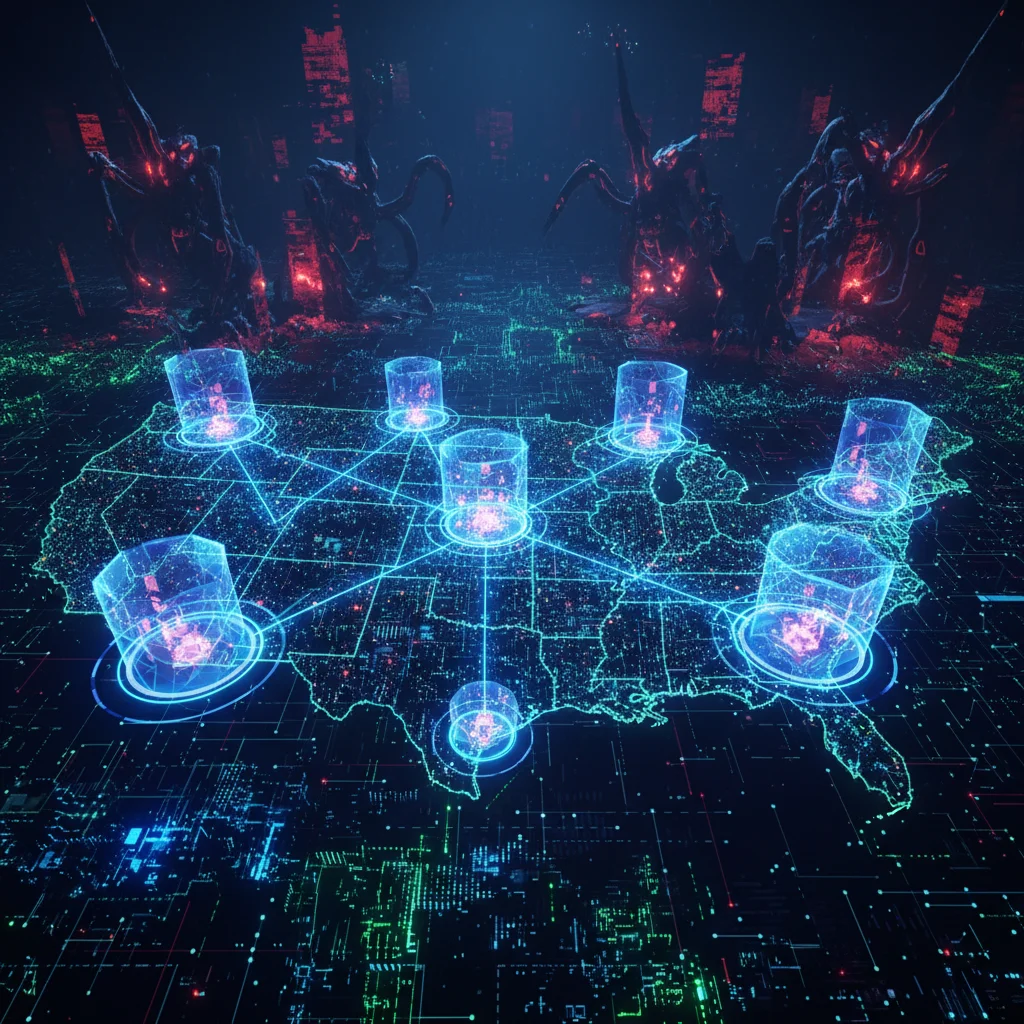
The digital landscape is in a constant state of flux, and with each passing year, the sophistication and sheer volume of cybersecurity threats escalate. For the United States, a nation heavily reliant on its advanced technological infrastructure, understanding and proactively addressing these evolving challenges is paramount. As we look towards 2026, several critical vulnerabilities and attack vectors are poised to become even more prevalent, posing significant risks to national security, economic stability, and public trust. This comprehensive analysis will delve into the top four US Cybersecurity Threats projected to dominate the threat landscape by 2026 and, crucially, outline robust mitigation strategies to safeguard America’s vital digital assets.
Anúncios
The Looming Storm: Understanding US Cybersecurity Threats in 2026
The United States’ technological infrastructure is a sprawling, complex web encompassing critical sectors such as energy, finance, healthcare, defense, and telecommunications. This interconnectedness, while enabling unprecedented innovation and efficiency, also presents an expansive attack surface for malicious actors. The motivations behind these attacks are diverse, ranging from state-sponsored espionage and sabotage to financially motivated cybercrime and ideological hacktivism. The stakes couldn’t be higher; a successful large-scale cyberattack could cripple essential services, disrupt supply chains, compromise sensitive data, and erode public confidence. Therefore, a forward-looking approach to identifying and neutralizing these US Cybersecurity Threats is not merely a technical exercise but a strategic imperative for national resilience.
Anúncios
As we approach 2026, the convergence of geopolitical tensions, rapid technological advancements, and the proliferation of sophisticated cyber weaponry creates a perfect storm for heightened cyber warfare. Nation-states continue to invest heavily in offensive cyber capabilities, often targeting critical infrastructure and intellectual property. Organized cybercriminal groups are becoming increasingly professionalized, adopting business-like models to maximize profits through ransomware and data theft. Furthermore, the burgeoning fields of artificial intelligence and quantum computing, while offering immense potential, also introduce new paradigms for both offense and defense in the cyber realm. This article aims to provide a clear-eyed assessment of the most formidable US Cybersecurity Threats on the horizon and offer actionable insights for their effective mitigation.
Threat 1: State-Sponsored Advanced Persistent Threats (APTs)
State-sponsored Advanced Persistent Threats (APTs) represent perhaps the most sophisticated and dangerous category of US Cybersecurity Threats. These are highly skilled, well-funded groups, often backed by nation-states, whose primary objectives include espionage, intellectual property theft, economic sabotage, and preparing for future kinetic conflicts by embedding malware into critical infrastructure. Unlike typical cybercriminals, APTs are characterized by their long-term presence in target networks, their ability to adapt to defensive measures, and their use of highly customized tools and zero-day exploits.
The Evolving Nature of State-Sponsored APTs
By 2026, the capabilities of state-sponsored APTs are expected to reach new heights. We anticipate an increased focus on supply chain attacks, where adversaries compromise trusted software or hardware vendors to gain access to a multitude of downstream targets. This strategy offers a force multiplier, allowing a single breach to ripple across numerous organizations, including government agencies and critical infrastructure providers. Furthermore, APTs will continue to refine their evasion techniques, making detection increasingly difficult. They will leverage more sophisticated social engineering tactics, exploit AI-driven vulnerabilities, and employ polymorphic malware that constantly changes its signature to bypass traditional antivirus solutions.
Targets and Impact
The primary targets for state-sponsored APTs will continue to be government agencies, defense contractors, research institutions, and critical infrastructure sectors. The impact of successful APT attacks can be catastrophic. Beyond the immediate financial losses associated with data breaches and system downtime, these attacks can lead to the theft of sensitive national security information, compromise military readiness, disrupt essential services like power grids and financial markets, and undermine public confidence in government and technology. The long-term presence of an APT within a network can also allow for data manipulation, which can be even more insidious than data theft, as it can lead to misinformed decisions or operational failures.
Mitigation Strategies for State-Sponsored APTs
Countering state-sponsored APTs requires a multi-layered, proactive, and adaptive defense strategy. Key mitigation strategies include:
- Enhanced Threat Intelligence Sharing: Robust intelligence sharing between government agencies, private sector entities, and international partners is crucial. This includes sharing indicators of compromise (IOCs), tactics, techniques, and procedures (TTPs) of known APT groups.
- Zero Trust Architecture: Implementing a Zero Trust model, which assumes no user or device inside or outside the network should be trusted by default, is essential. Every access request must be verified, authenticated, and authorized.
- Advanced Endpoint Detection and Response (EDR) and Extended Detection and Response (XDR): Deploying advanced EDR and XDR solutions can provide deeper visibility into endpoint activities, detect anomalous behaviors, and enable rapid response to sophisticated threats that bypass perimeter defenses.
- Supply Chain Security Audits: Rigorous security audits of all third-party vendors and suppliers are critical. This includes evaluating their security posture, contractual obligations, and incident response capabilities. Organizations must demand transparency and verifiable security controls from their entire supply chain.
- Regular Penetration Testing and Red Teaming: Continuously testing defenses with realistic attack simulations helps identify vulnerabilities and improve incident response capabilities against persistent and adaptive adversaries.
- Employee Training and Awareness: Phishing and social engineering remain primary entry points for APTs. Regular, sophisticated training for all employees on identifying and reporting suspicious activities is indispensable.
- Network Segmentation and Micro-segmentation: Dividing networks into smaller, isolated segments can limit the lateral movement of adversaries once they gain initial access, thereby containing the damage.
Threat 2: Ransomware 2.0 – Targeted, Destructive, and Extortionate
Ransomware has evolved significantly from opportunistic, widespread attacks to highly targeted, sophisticated operations. By 2026, we anticipate ‘Ransomware 2.0’ to be one of the most financially crippling US Cybersecurity Threats. This new generation of ransomware will be characterized by extreme targeting, multi-extortion tactics, and a focus on critical infrastructure and large enterprises where the potential for a massive payout is highest.
The Evolution of Ransomware Tactics
Ransomware groups are increasingly adopting ‘Ransomware-as-a-Service’ (RaaS) models, making sophisticated tools and infrastructure accessible to a broader range of actors. They are also moving beyond simple encryption to ‘double extortion’ – encrypting data and exfiltrating it, threatening to publish it if the ransom is not paid. By 2026, we can expect ‘triple extortion,’ where attackers also launch DDoS attacks against victims or directly contact their customers/partners to pressure them into paying. Furthermore, ransomware will become more destructive, not just encrypting but actively corrupting or deleting data, making recovery even more challenging, even with backups.
Initial access brokers (IABs) will continue to play a crucial role, providing ransomware gangs with pre-negotiated access to victim networks, often through compromised RDP, VPN vulnerabilities, or stolen credentials. This specialization within the cybercriminal ecosystem makes ransomware attacks faster, more efficient, and harder to trace. The focus will shift from encrypting individual workstations to encrypting entire networks, including backup systems, to maximize leverage.
Impact on US Infrastructure
The impact of Ransomware 2.0 on US Cybersecurity Threats will be severe. Critical infrastructure sectors – such as healthcare, energy, and transportation – will remain prime targets due to the high societal and economic costs of disruption. A successful ransomware attack on a hospital, for instance, could halt life-saving procedures, while an attack on an energy grid could lead to widespread power outages. Beyond direct financial costs, ransomware causes significant reputational damage, operational downtime, and can even lead to long-term economic instability for affected organizations and sectors.
Mitigation Strategies for Ransomware 2.0
Defending against Ransomware 2.0 requires a robust, proactive, and resilient approach:
- Impeccable Backup and Recovery Strategy: Implement a 3-2-1 backup rule: three copies of data, on two different media, with one copy off-site and offline (air-gapped). Regularly test backup restoration processes to ensure data integrity and rapid recovery.
- Strong Access Control and Multi-Factor Authentication (MFA): Enforce strong, unique passwords and mandatory MFA for all accounts, especially for remote access, privileged accounts, and cloud services.
- Patch Management and Vulnerability Scanning: Maintain an aggressive patch management program to address known vulnerabilities promptly. Conduct regular vulnerability scans and penetration tests to identify and remediate weaknesses before attackers exploit them.
- Network Segmentation: Isolate critical systems and data from the rest of the network. This prevents ransomware from spreading rapidly across the entire infrastructure once a foothold is gained.
- Endpoint Detection and Response (EDR): Deploy EDR solutions that can detect and prevent ransomware activities, such as file encryption, process injection, and suspicious network communications, in real-time.
- Incident Response Plan: Develop and regularly exercise a comprehensive incident response plan specifically for ransomware attacks. This plan should clearly define roles, responsibilities, communication protocols, and recovery procedures.
- Security Awareness Training: Educate employees about phishing, suspicious emails, and safe browsing practices, as social engineering remains a primary vector for ransomware delivery.
Threat 3: AI-Driven Malware and Autonomous Cyberattacks
The rise of artificial intelligence (AI) presents a double-edged sword in cybersecurity. While AI can significantly enhance defensive capabilities, it also empowers adversaries to create more sophisticated and evasive malware. By 2026, AI-driven malware and autonomous cyberattacks will emerge as a formidable category of US Cybersecurity Threats, capable of adapting, learning, and operating with minimal human intervention.

The Power of AI in Offensive Cyber Operations
AI can be leveraged by attackers to automate and scale various stages of an attack:
- Automated Reconnaissance: AI algorithms can rapidly scan vast amounts of data to identify vulnerabilities, misconfigurations, and potential targets, far more efficiently than human attackers.
- Polymorphic and Evasive Malware: AI can generate malware that constantly changes its code and behavior, making it extremely difficult for traditional signature-based antivirus solutions to detect.
- Sophisticated Phishing and Social Engineering: AI-powered tools can craft highly personalized and convincing phishing emails, voice deepfakes, and even video deepfakes, increasing the success rate of social engineering attacks.
- Autonomous Exploitation: AI agents could potentially identify zero-day vulnerabilities, develop exploits, and launch attacks without human oversight, leading to faster and more widespread breaches.
- Adaptive Attack Paths: AI can dynamically adjust attack strategies based on the target’s defensive responses, finding new pathways and circumventing security controls in real-time.
Potential Impact
The impact of AI-driven attacks on US Cybersecurity Threats could be revolutionary. The speed and scale of these attacks could overwhelm existing defensive mechanisms, leading to rapid compromise of systems and widespread disruption. The ability of AI to learn and adapt means that once a vulnerability is exploited, the malware could quickly evolve to exploit similar weaknesses across an entire network or even industry. This could lead to a new era of ‘flash’ compromises, where entire organizations are breached in minutes rather than hours or days. Furthermore, attribution of AI-driven attacks could become even more challenging, complicating international responses.
Mitigation Strategies for AI-Driven Malware
Combating AI-driven malware requires an equally sophisticated and AI-enhanced defense:
- AI-Powered Security Solutions: Deploy AI and machine learning-driven security tools for anomaly detection, behavioral analysis, and threat hunting. These tools can identify subtle deviations from normal behavior that indicate an AI-driven attack.
- Proactive Threat Hunting: Organizations must shift from reactive defense to proactive threat hunting, actively searching for signs of compromise rather than waiting for alerts. AI can assist in processing vast amounts of log data to identify suspicious patterns.
- Security Orchestration, Automation, and Response (SOAR): Implement SOAR platforms to automate incident response workflows, allowing for faster containment and remediation of AI-driven threats.
- Continuous Security Monitoring: 24/7 monitoring of network traffic, endpoints, and cloud environments using advanced analytics to detect sophisticated and evasive attacks.
- Adversarial AI Research: Invest in research and development to understand adversarial AI techniques and develop countermeasures. This includes training defensive AI models to recognize and neutralize AI-generated threats.
- Quantum-Resistant Cryptography: As quantum computing advances, existing encryption methods could become vulnerable. Organizations should begin exploring and implementing quantum-resistant cryptographic solutions to protect long-term data confidentiality.
Threat 4: Supply Chain Attacks on Software and Hardware
Supply chain attacks have proven to be an incredibly effective vector for adversaries, allowing them to compromise numerous targets through a single point of entry within a trusted vendor or product. By 2026, these attacks will intensify and diversify, becoming one of the most critical US Cybersecurity Threats, particularly targeting critical software components, open-source libraries, and hardware manufacturing processes.
The Growing Vulnerability of the Supply Chain
Modern software development relies heavily on third-party components, open-source libraries, and interconnected services. This complex ecosystem creates numerous opportunities for malicious actors to inject vulnerabilities or malicious code at any stage of the supply chain – from development environments and build servers to distribution channels and update mechanisms. Hardware supply chains are equally vulnerable, with the potential for embedded backdoors or compromised components during manufacturing.
The proliferation of containerization and microservices, while offering agility, also expands the attack surface by introducing more dependencies. Attackers are increasingly targeting CI/CD pipelines, poisoning publicly available code repositories, and compromising software update servers to distribute malware to a wide range of users. The trust placed in these upstream providers makes such attacks particularly devastating, as they bypass many traditional perimeter defenses.
Impact on US Tech Infrastructure
A successful supply chain attack can have widespread and cascading effects on US Cybersecurity Threats. Consider the impact of an attack on a widely used operating system component, a critical cloud service provider, or even firmware within network devices. Such a breach could compromise thousands of government agencies, corporations, and individuals simultaneously, leading to massive data breaches, system outages, and potential national security implications. The SolarWinds attack served as a stark reminder of the destructive potential of this threat vector, demonstrating how a single compromise can grant access to numerous high-value targets.
Mitigation Strategies for Supply Chain Attacks
Addressing supply chain vulnerabilities requires a holistic and collaborative approach:
- Software Bill of Materials (SBOM): Mandate and utilize Software Bill of Materials (SBOMs) for all software components. An SBOM provides a comprehensive list of all third-party and open-source components used in a software product, enabling better visibility into potential vulnerabilities.
- Rigorous Vendor Risk Management: Establish and enforce stringent security requirements for all third-party vendors and suppliers. Conduct regular security assessments, audits, and ensure contractual obligations include strong cybersecurity clauses.
- Code Signing and Integrity Checks: Implement and enforce code signing for all software, and verify digital signatures during installation and updates to ensure software integrity.
- Secure Development Lifecycles (SDL): Encourage and, where possible, mandate secure development practices throughout the entire software development lifecycle, including secure coding, regular security testing, and vulnerability management.
- Network Segmentation and Micro-segmentation: Isolate critical systems and development environments to limit the blast radius of a supply chain compromise.
- Threat Intelligence Sharing: Participate in industry-specific and cross-sector threat intelligence sharing initiatives to stay informed about emerging supply chain attack vectors and compromised components.
- Container and Cloud Security: Implement robust security practices for containerized environments and cloud infrastructure, including image scanning, runtime protection, and strict access controls.
- Hardware Assurance: For critical hardware, explore options for trusted manufacturing processes, supply chain transparency, and hardware integrity verification.
The Path Forward: Building a Resilient US Tech Infrastructure
The landscape of US Cybersecurity Threats in 2026 will undoubtedly be more complex and challenging than ever before. However, by understanding these evolving threats and proactively implementing comprehensive mitigation strategies, the United States can significantly bolster its defensive posture. The key to resilience lies not just in technological solutions but also in fostering a culture of cybersecurity awareness, collaboration, and continuous adaptation.
Key Principles for National Cybersecurity Resilience:
- Public-Private Partnership: The government and private sector must deepen their collaboration, sharing threat intelligence, best practices, and resources to create a unified front against cyber adversaries.
- Investment in Cybersecurity Research and Development: Continued investment in cutting-edge cybersecurity research, particularly in areas like AI-powered defense, quantum-safe cryptography, and novel detection techniques, is essential to stay ahead of attackers.
- Workforce Development: Addressing the critical shortage of skilled cybersecurity professionals through education, training, and recruitment initiatives is paramount.
- International Cooperation: Cyber threats transcend national borders. International collaboration on intelligence sharing, law enforcement, and norm-setting in cyberspace is vital to deter and prosecute malicious actors.
- Regulatory Frameworks: Developing and enforcing clear, adaptable regulatory frameworks that incentivize robust cybersecurity practices across all critical sectors.
- Continuous Improvement: Cybersecurity is not a static state but an ongoing process. Organizations must continuously assess their vulnerabilities, update their defenses, and refine their incident response plans.
In conclusion, the top four US Cybersecurity Threats for 2026 – state-sponsored APTs, Ransomware 2.0, AI-driven malware, and sophisticated supply chain attacks – represent significant challenges to the nation’s technological infrastructure. However, with strategic foresight, robust investment, and a collaborative spirit, the United States can build a resilient digital future capable of withstanding the evolving cyber storm. The time to act is now, to ensure the security and prosperity of the nation in the digital age.